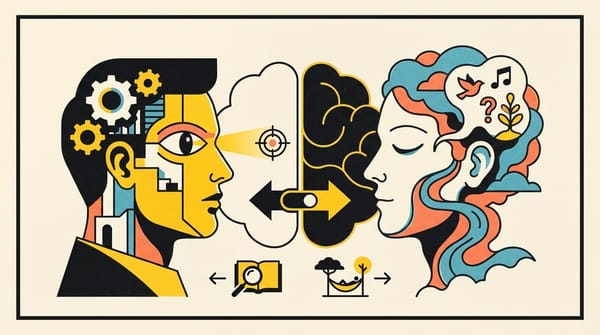
4 Habit-Building Techniques That Actually Work
Transform your habits effectively! Discover 4 science-backed techniques to shape your identity and behavior for lasting change.


In this section, we'll explore different techniques that help build habits and create systems. Use whatever resonates with you. If something clicks and inspires you — try it out. Skepticism won't help you here. Remember, these techniques shouldn't make habit-building harder. Make the process easier: set up your environment, designate specific times and places for your routine actions.
1. Identity-Based Habits
Let's start with the fact that habit change happens on 3 levels.
- Outcome change — achieving specific things: learning a language, losing weight, writing a book, etc.
- Process change — a new workout routine, a new vocabulary system, or a new approach to managing your blog.
- Identity change — shifting your beliefs, worldview, and how you see yourself and others.
Put simply:
- outcomes — what you get;
- processes — what you do;
- identity — what you believe.
90% of people focus on the outcomes they want to achieve.
9% — on what they do.
1% — on what they believe.
The most effective approach is believed to be focusing on who you want to become.
For example, if you want to quit smoking, don't think about it as breaking/changing a habit — think about becoming a non-smoker. You need to stop identifying yourself as "a smoker."
The same applies to everything else:
- not "read a book," but become a reader;
- not "learn to play guitar," but become a musician;
- not "run every day," but become an athlete;
- and most importantly in today's world — not "complete a course," but fall in love with learning.
This works in reverse too
If you decide you're someone who's always late, perpetually groggy in the morning, or "just not a math person" — that becomes a barrier. It'll hold you back from showing up on time, working out in the mornings, or learning to code.
I have a vivid example from my own experience. I worked with a woman who believed she was terrible at math and could never figure out programming — that she was a "humanities person" through and through and this stuff just wasn't for her.
I convinced her that this was all in her head, that it was a conscious choice she was making. Once she understood and accepted this, she changed how she saw herself. She completed a full programming course, mastered the fundamentals, and successfully defended her final project.
There's a two-step process for changing your identity — or if you prefer, creating a new version of yourself.
- Decide who you want to be. If you want to make your bed every day and put your things away, identify yourself as an organized person. If you want to draw every day, identify yourself as a creative person.
The more you perform actions consistent with that identity, the more you reinforce it.
The author of "Atomic Habits" became a writer through running his own blog — he wrote two articles a week and, by using this system, became a writer.
- Prove to yourself that you're already that person. You can do this through small wins. For example, you want to write a book. That's a goal. So think about what kind of person writes books. Maybe someone consistent and curious. This shifts your focus from the outcome to the identity.
Using this approach, one woman lost 100 pounds. She constantly asked herself: "What would a healthy person do in this situation? Walk or take a cab? Order a burger or a salad?"
Gradually, by acting like a healthy person, she became one.
2. Shaping Behavior
There are 4 principles/laws that can help you change your behavior.
First principle — make your actions obvious and conscious.
People who perform certain actions regularly over time can stop noticing they're doing them. They only become aware when someone else points it out.
For example