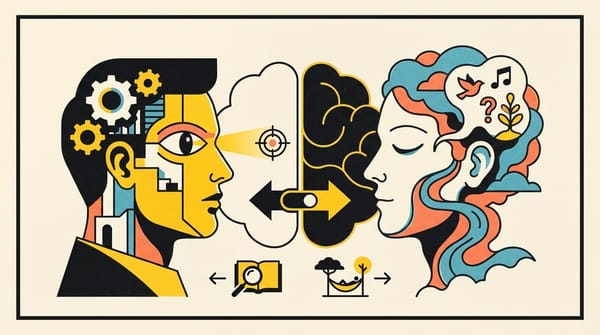
I tried to out-manipulate a manipulator. Here's why disengaging works and fighting back doesn't.
I thought matching a manipulator move-for-move would level the playing field. Instead, it pulled me deeper into a game I couldn't win.


By the time I realized I was being played, it was already too late
The word "manipulation" is everywhere right now. But I've noticed most people use it wrong — they slap the label on everything from "please do the dishes" to a yogurt commercial.
Actual manipulation is when someone pushes you to act out of character. Like when a person insults you on purpose — not because they're angry, but because they want you angry. Knock you off balance. Textbook move.
Here's the thing, though: not all manipulation is evil. In everyday conversation, we manipulate constantly. It's a chess move — a way to get from point A to point B. Picture a lazy employee whose manager finds just the right way to nudge them toward actually getting stuff done. Technically? Manipulation. In practice? Sometimes the only tool that works.
Where "normal" ends and "toxic" begins
The trouble starts when manipulation turns destructive. When someone blackmails their way to a bonus at work — that's not just unpleasant. It chips away at the other person's mental health.
Same story in relationships. One partner manufactures jealousy to get attention. Seems like a harmless game. But both end up losing. Zero-sum — no winners.
What surprised me: the manipulator often suffers too. They pick a fight, "win" — and end up alone. Hollow. Turns out they're not just wrecking someone else's life. They're wrecking their own.
Why people do this in the first place
For a long time I thought manipulators were some special breed of villain. Reality is way more boring.
Negative experience. If someone grew up in an environment where manipulation was normal, they just don't know another way to communicate. For them it's not "toxic behavior" — it's the only language they've got.
Sociopathic tendencies. Some people have a hard time controlling aggression. They act toxic not because they choose to — but because they don't know how else to operate.
Lack of empathy. People with low sensitivity literally don't see the pain they cause. They bulldoze other people's boundaries not out of malice, but because those boundaries are invisible to them. Sometimes it's innate. Sometimes it's learned — a kid who grew up on the receiving end of aggression becomes numb to other people's pain. A defense mechanism that once helped them survive, then started making it harder to live.
Honestly? When I understood this, some of my anger toward manipulators faded. Not an excuse — no. But understanding where it comes from makes it easier to respond without losing your mind.
How I learned to spot manipulation
First signal: imbalance. If I'm doing more work than the other person, or handling tasks that aren't mine — something's off. That feeling of "why the hell am I doing this again?" is a pretty reliable indicator.
What I've found works best as a first step: just say out loud what you see happening. Name the game. "I notice you're trying to make me feel guilty so I'll say yes." Sounds awkward. But more often than not, that's enough — the manipulator backs off, because the trick only works in the dark.
When words aren't enough
If a direct conversation doesn't help, the next step is to reduce contact. Minimize that person's influence on your life. In the worst case — cut communication entirely.
There's also counter-manipulation — fighting fire with fire. I tried it. Here's what I learned: it's a losing game. A seasoned manipulator will almost certainly win — it's their home turf. You'll burn through your energy and still come out behind.
What actually works
A manipulator is powerless without a target. Their entire system only functions when someone reacts, engages, takes the bait. Breaking that cycle doesn't mean "winning." It means walking away from a game you were never invited to play.
If this hits close to home — think about it: is there a situation in your life right now where you feel that imbalance? Where you're doing more than you should, and you can't explain why? Maybe it's time to call it what it is.
When words become weapons
The word "narcissist" has racked up nearly four billion views on TikTok. Four billion — that's more than half the planet's population. Meanwhile, narcissistic personality disorder affects about one percent of people. The math doesn't add up. And that's the first sign something went sideways.
Psychological terminology escaped the therapist's office and became pop culture. "Gaslighting," "abuse," "toxic," "boundary violation" — words that once described specific clinical conditions now show up in every kitchen argument. Husband disagrees with his wife — gaslighter. Friend cancels plans — toxic. Boss asks you to redo a report — abuser.
The irony is that these words were invented to protect people. Now they do damage. A normal, healthy, self-aware person hears "you're gaslighting me" — and freezes. Starts digging through their own behavior: what if it's true? What if I don't see it?
That's exactly what the manipulator needs.
What's really behind the word
But before getting into the new forms this takes, it's worth understanding the nature of the thing itself — because without that, it's easy to confuse cause and effect.
Manipulation is covert control. Not a request, not persuasion, not even pressure — something subtler. You're doing someone else's work, agreeing to things you don't need, feeling guilty for something you didn't do, and you can't explain how you got here.
It's also important not to swing to the other extreme: not all manipulation is harmful. We manipulate all the time — choosing our words, picking the right moment for a conversation, framing a request so it's harder to refuse. A manager who found a way to motivate a lazy employee is technically a manipulator. A mother telling her kid "daddy will be upset" is too. It's a tool, not a diagnosis.
The problem starts where the tool becomes a system. Where one person repeatedly destabilizes another for personal gain — and both end up worse off, except one of them knows it and the other doesn't.
The classic arsenal
For a long time, this arsenal ran on instinct. The manipulator would provoke jealousy to get attention, press guilt buttons to get agreement, weaponize emotions to keep control. It played out like a zero-sum game — looks like someone's winning, but in the end both lose.
Something that surprised me once: the manipulator suffers too. They start a fight, "win" — and end up alone, with a hollow feeling inside. They destroy not just someone else's life but their own. They just can't see it — because seeing means admitting, and they're not ready for that.
Why people do this at all — the tempting answer is "because they're villains." But it's more mundane. Someone who grew up in an environment where manipulation was the norm simply doesn't know another language. For them it's not "toxic behavior" — it's the only way they've ever gotten what they need. A kid who was pushed around grows up numb to other people's pain — a defense mechanism that once helped them survive, then started making it harder to live.
When I realized this, some of the anger let go. Not an excuse — but understanding where it comes from helps you respond more calmly. Even if just for a second.
And that could've been the end of it — if not for one thing.
The manipulator with a TikTok degree
Reels showed up, and the rules of the game changed.
Picture this: someone who's been manipulating by instinct their whole life opens a video called "10 Signs You're a Manipulator" — and recognizes themselves. Every single point, clear as a mirror. They see what they do and how it works.
A moment of truth — and a fork in the road. A healthy person would stop and try to change. But a manipulator does something else: they get an instruction manual. Before, they'd guilt-trip people on instinct. Now they have a vocabulary. "You're triggering me," "that's toxic," "you're violating my boundaries" — and they say this precisely when someone just told them "no."
Psychologists described this mechanism back in the nineties — long before TikTok. Jennifer Freyd called it DARVO: Deny, Attack, Reverse Victim and Offender. The manipulator denies their behavior, attacks the person who noticed it, then declares themselves the real victim. The playbook is old as dirt, but TikTok put it on steroids: now anyone can dress up this inversion in therapeutic language, and it sounds not like an attack but like a clinical assessment.
That's the most dangerous part. When someone says "you piss me off" — it's rude, and it's easy to respond to. But when they say "you systematically invalidate my feelings and violate my boundaries" — it sounds like a professional opinion. You involuntarily take it seriously, even if a second ago you just declined to do someone else's work.
Research backs this up: when an aggressor uses DARVO, people around them start seeing the aggressor as the victim and the actual victim as the one at fault. Not a gut feeling — a measurable, reproducible effect.
The trap for people who know how to think
And here's where a paradox shows up that's genuinely unsettling.
The capacity for self-reflection is a sign of a healthy mind. When someone tells you "you're hurting me," the normal response is to pause and check yourself. That's good. That's what makes you a decent person.
But that exact capacity becomes a vulnerability. A manipulator throws out "you're a gaslighter" — and you immediately start looking for signs of gaslighting in yourself, because you're wired to check, wired to consider the possibility that you're wrong. A real manipulator never asks themselves that question — they don't have that program installed.
The very fact that you're sitting there, agonizing over whether you might actually be an abuser — already tells you that you're not. But try believing that when someone's been telling you three times a week that you're "toxic."
Gradually, you start living under the label. You second-guess every word. You're afraid to show emotion — what if that's "boundary violation." You apologize for things you didn't do. You lose yourself — not because you're a bad person, but because you're good enough to take the accusation seriously.
What to do about it
Counter-manipulation is the first thing that comes to mind: fight fire with fire. I tried it and realized — it's a losing strategy. A seasoned manipulator is on home turf: they live in this, breathe it, know every turn. You'll spend your energy and still lose, because they've got more practice and less conscience.
Something else works. Your body knows before your head does: if after talking to someone you feel guilty but can't clearly explain what for — that's a signal. Not a diagnosis, but a reason to stop and pay attention.
Next — look for the pattern. One fight means nothing. But if every conflict ends with you apologizing and the other person accusing — that's not a coincidence anymore. Especially when the accusations come wrapped in clinical language: "you're gaslighting me," "this is abuse," "you're a narcissist." The thicker the therapeutic vocabulary, the more reason to wonder who's actually using it as a weapon.
And the most effective step — name the mechanism. You don't have to say it out loud, though out loud works too: "I notice that you call me a manipulator every time I disagree with you." A manipulator usually backs down after that, because the trick only works in the shadows — only while you don't understand what's happening.
Research confirms it: people who know about DARVO — deny, attack, reverse — are significantly less susceptible to it. Knowing the mechanism works like a vaccine: doesn't give you full immunity, but protects you from the worst of it.
At the end of the day, a manipulator is powerless without someone who reacts. Their whole system relies on one condition: somebody who engages, defends themselves, takes the bait. Breaking that cycle doesn't mean winning. It means walking away from a game you were never invited to play.
Instead of a conclusion
We're living in a strange time: words created to describe pain have become tools for inflicting it. The person who casually slaps the "abuser" label on others — maybe deserves a closer look. And the person who's agonizing over "what if it's me?" — most likely isn't.
If self-reflection is both our strength and our vulnerability, then what do we do? Stop thinking — become just like them. Keep thinking — stay open to the hit. Maybe the answer isn't to stop questioning yourself. Maybe it's learning to tell the difference between your own doubts and the ones someone planted there.
Protect your head. Check facts, not feelings. Don't let someone else's vocabulary define who you are. And if after all of that, someone still calls you "toxic" — well, toxic it is. You'll survive.
And if I'm being completely honest — sometimes the best defense against manipulation sounds pretty simple: go fuck yourselves, all of you.