Options B, C, and D are dead. Here's your permission slip.
You're not anxious because of AI—you're anxious because you're stuck reading instead of deciding. The fix is brutal and simple.

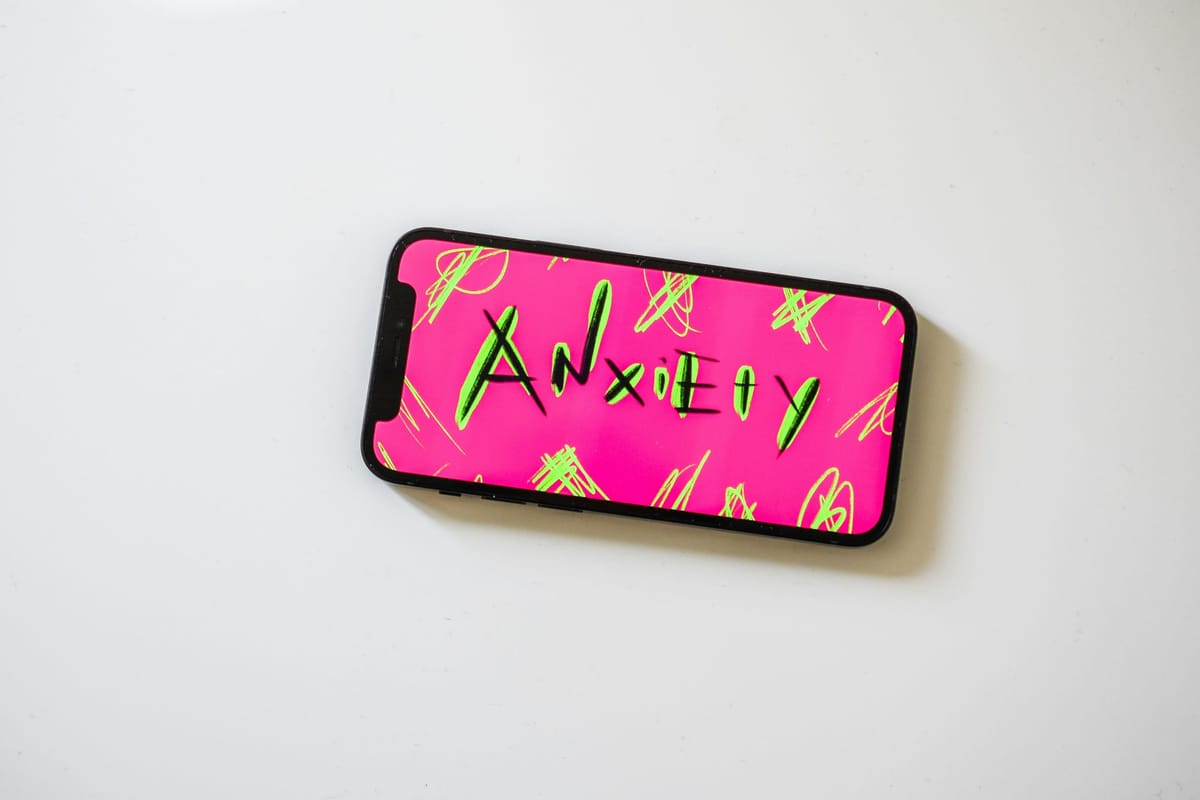
You open LinkedIn. There's a post about how AI replaced an entire marketing department. You scroll. Another one—programmers will be obsolete in two years. Then a listicle: "10 AI Tools You Need or You'll Fall Behind Forever." You save it but don't open it. Because yesterday you saved 15 just like it.
Sound familiar?
This is anxiety. But not the kind where there's a real threat. The kind where the threat seems real, but what exactly it is, what to do about it, how to act—none of it is clear.
Here's the thing: the problem isn't AI, or the market, or the economy. The problem is uncertainty. You don't understand what's happening, so you start absorbing information endlessly. More articles. More podcasts. More opinions.
But information from media doesn't help you make decisions. It's created for emotions, not action. So you get stuck in a loop: read—get anxious—read more—get more anxious.
This means: in anxious moments, you need to get to a concrete action as fast as possible. Not perfect. Not optimal. Just—concrete. If it turns out badly—you'll do something else. But first, do something instead of endlessly chewing on options.
And here's the paradox that's hard to accept: certainty and decisiveness matter more than being right. Because "what's right"—nobody knows in this situation. If they did, there'd be no anxiety.
You can't wait for someone else to bring clarity. You have to create it yourself—through your own act of will. Even if the decision turns out to be wrong.
I have a specific formula for this. Here it is.
Decide, do, pay, repeat
A four-word formula that works in any situation of uncertainty. Five steps:
Step 1. Gather information—to make a decision.
Not to "stay informed." Not "just in case something changed." You sit down, read, listen—with one goal: to make a decision. The moment you have enough information for a decision—stop. Reading more is harmful.
Step 2. Pick one and discard the rest.
Not "keep in mind." Not "we'll see how it goes." Discard. You chose option A—options B, C, and D no longer exist. They're dead.
Step 3. Accept the price.
Every decision has a price. It might turn out wrong. It might cost you. You need to say this to yourself: "I'm willing to pay for the consequences of this decision. Here's the specific price, and I accept it."
Step 4. Define triggers for reconsideration.
Not internal feelings like "I'm feeling anxious." Concrete external factors: "If X happens—I reconsider. If X hasn't happened—I continue as decided, without wavering."
Step 5. Act.
That's it. Decision made. Now—execute. Don't look back, don't doubt, don't reconsider until the trigger from step 4.
Sounds simple. But every step is an act of will, because an anxious brain wants exactly the opposite: endlessly gather information, keep all options open, avoid paying any price, and reconsider every day.
Let me show you how this works in practice.
Example 1: Choosing an AI tool
Early 2025. LinkedIn feed—pure noise. Every day—a new neural network announcement. Every week—"the tool that will change everything." GPT-5, Claude, Gemini, Llama, Mistral, Copilot, Cursor, Devin, plus ten more names you'll forget in a month.
Everyone's testing. Comparing. Writing reviews. Sharing prompts. An endless race with no finish line.
Nothing makes sense. Which tool to pick? What to learn? What to bet on? What if tomorrow something better comes out and everything you learned is garbage?
I applied the formula:
- Studied the main options—not all of them, just the main ones. With the goal of making a decision, not building a bookmark collection
- Chose Claude Code as my primary tool. Discarded the rest. Not "set aside for later." Discarded
- Accepted the price: maybe another tool would be better. Maybe I'll miss out on something. That's the price I'm willing to pay
- Trigger for reconsideration: if Claude Code stops handling my tasks. Not "if someone on Twitter says X is better"—specifically, if my tool can't do my work
And that's it. Now—I work. I grow. I develop.
Is this the right choice? Maybe not. Maybe Cursor is better for my tasks. Maybe in six months something fundamentally new will appear. Maybe.
But I have a plan. I'm acting on it. And I'm not wasting time endlessly comparing tools I don't use.
While acquaintances "test a new neural network" every week and haven't made progress with any of them—I've built a workflow that delivers results. Am I scared I'll miss something? Sometimes. Anxious? No. Because I have a concrete decision and a concrete trigger for reconsideration.
The goal was never to find the perfect tool. The goal was—to stop doomscrolling and start working. Decision made, now—I act.
Example 2: Career after emigration
The same formula works with careers. More accurately—I know what happens when you don't use it.
Several years ago I emigrated. New country, new language, zero contacts. No idea how to make money. No idea which profession the new market needs. No idea about anything.
And instead of picking one direction and discarding the rest—I started learning everything at once. Motion design. Python. Data analytics. And something else. And more.
Every week—a new course. Every month—a new "promising direction." Not a single discarded option. Not a single decision made. Not a single trigger for reconsideration. An endless race where you're running in all directions at once.
I pushed myself to the point where my body gave out. Not the kind of burnout where you need a retreat in Bali. The kind where just trying to think makes you nauseous. Where you lose consciousness. Where your body physically forbids you to continue.
Recovery took five months working in a bar. Not a single thought about career. No attempts at learning. No plans. Hands, glasses, people.
Then I understood: the problem wasn't the amount of work. The problem was the absence of a decision. I kept all options open, didn't accept the price of any of them, and never defined when to stop. My brain couldn't handle the uncertainty—and shut down.
Now I do it differently. Chose a direction. Discarded the rest. Accepted the price: maybe I didn't pick the best one. Trigger for reconsideration: if I don't see growth in a year—I reconsider. Not sooner.
Is this the right path? Maybe not. But I'm at peace with it.
Example 3: Blogs and platforms
The same cycle started with blogs.
I emigrated to Spain. Didn't know if I'd stay. Didn't know who to write for. In Russian? English? Spanish? On which platform? WordPress? Medium? Social media? For which audience—Russian, international, Spanish?
All variables open. Not a single decision. An endless loop.
Then I remembered how endless loops end. Five months in a bar—a good teacher.
So I just decided:
- I'll keep doing what I love—writing about content and communication. Not because analysis showed it's profitable. Because it's mine
- Personal blog—in two languages: English, Spanish. I live in Spain, I write for the world and for the country I'm in
- Professional blog—English only. No Spanish version needed. Why—I won't say
- Ghost. Not WordPress. Not Medium. Not a social platform. Ghost—because I own it. No platform can block it or steal my audience. It's simple, powerful, and beautiful. I love tools that do a lot with little
No market analysis. No competitor research. No A/B-testing platforms.
Could WordPress have given me better SEO? Possibly. Could a Spanish version of the second blog bring more readers? Can't rule it out. Could social media have given faster growth? Probably.
But those are the five percent I'm not chasing. I estimated the cost of being wrong. Built it into my internal budget. And went to work.
While others are deciding which platform to blog on, what language to write in, and which audience to target—I have three blogs, three languages, and a publishing system that runs every day.
The bottom line
Don't analyze a thousand sources. Don't keep options open. Don't wait for the perfect moment.
Make a decision. Name the price to yourself. Define when to reconsider. And act.
Where there's action, there's no anxiety.