Why We Feel Like We Don't Matter: 5 Key Reasons and How to Fix Them
Feeling like you don't matter? Discover how to shift your mindset and find your sense of worth through connection and emotional awareness.


What's really going on in our heads when we feel like nobody loves us and we don't matter to anyone.
How can you tell that things aren't actually that bad? Read more about the two parts of this problem.
Thoughts and Feelings
Behind phrases like "nobody loves me" or "I don't matter to anyone" often hides deep insecurity. These thoughts trigger our fear of loneliness — an ancient mechanism that once kept us alive: being cast out from the tribe meant death.
This mechanism developed throughout the entire evolution of Homo sapiens — roughly 300,000 years. It's not going anywhere, and we need to understand how it works so we don't confuse ancient alarm signals with reality.
In today's world, people rarely end up truly alone: we text, order food delivery, interact with dozens of people daily. The line between physical presence and digital connection is blurring — and our brains haven't caught up yet.
Research confirms it: oxytocin flows when we're around people we're close to and feel safe. Video calls work too — not as powerfully as face-to-face interaction, but enough to reduce feelings of isolation.
Why This Happens
The brain constantly scans for threats in our environment. Out of a thousand pleasant interactions, it latches onto the one that went wrong — this is called negativity bias. This mechanism helped our ancestors react instantly to predators: fight, flight, or freeze.
Today there are no lions hiding in the bushes, but our powerful defense system hasn't gone anywhere. It finds new reasons to worry: an unread message becomes "they're ignoring me," a pause in conversation turns into "I'm boring them."
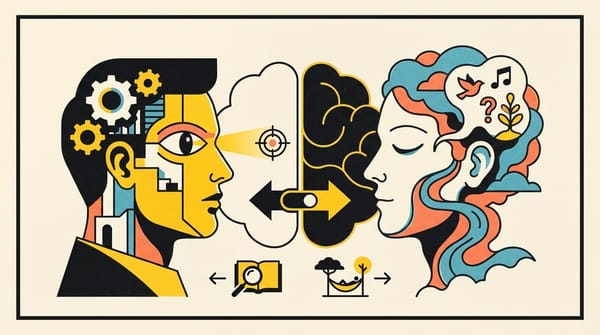
A simple trick helps with this: separate feelings from facts. Ask yourself: "What exactly am I feeling? What evidence do I actually have?"
Thinking Traps
When loneliness hits — stop and ask: "Why do I think this?" Often you'll find that your feelings don't match reality. We confuse not talking to someone right now with being completely alone forever. That's a cognitive trap, not a fact.
How to Change Things
Seek connection actively. Don't wait to be found — put yourself out there, try new things. Every interaction, even an awkward one, expands your possibilities.
Lower your expectations. Life isn't a movie where friends just show up. Relationships take effort from both sides.
Check your labels. If you've convinced yourself you're "the grumpy one" — people pick up on that and respond accordingly. Try a new approach.
Give yourself permission to fail. We rarely regret what we did. Far more often, we regret what we never tried.
Remember your worth. Even if you can't see how you affect others — that doesn't mean you don't.
Conclusion
Feeling unwanted is almost always a thinking error, not a reflection of reality. In a world of texts and video calls, true isolation is rare.
Use this time: build skills, find hobbies, get out and meet people. We all want to love and be loved — and every one of us deserves it.