Your Ads Won't Save a Broken Offer: The 4-Part System Freelancers Skip
Most freelancers pour money into ads while their offer, pricing, and purchase path are broken. Here's the 4-element system that actually fills your pipeline.

Why most marketers crash and burn here
Freelancers, consultants, and creators share a stubborn belief: "Just run great ads and clients will flood in." Instagram targeting, LinkedIn promotion, paid connects on Upwork. Money into ads → clients out the other side. Simple math.
Except it doesn't work.
Creative advertising doesn't mean effective advertising. A beautiful banner with a 0.3% conversion rate is an expensive decoration, not marketing. Meanwhile, the thing that actually sells can be bone-dry and "uncreative": a well-written service description on the right platform. A plain case study on LinkedIn that reads like a status report — but lands a $5,000 project.
You can sell without ads at all. Referred clients have 37% higher retention and 25% greater lifetime value than ad-sourced clients (Nector, 2025). A freelancer with a referral system spends zero on advertising — and stays booked months ahead.
For most solo professionals, advertising is too expensive to make sense. If your average project is $3,000 and your cost to acquire a client through ads is $800, the economics collapse after one quarter. Meanwhile, the people selling you advertising — agencies, platforms, SaaS tools — have every incentive to keep you buying subscriptions and budgets. They don't carry any responsibility for your pipeline.
Here's the thing. Before you spend a dollar on ads, make sure the other three parts of the system actually work.
Advertising is just one piece of the marketing system
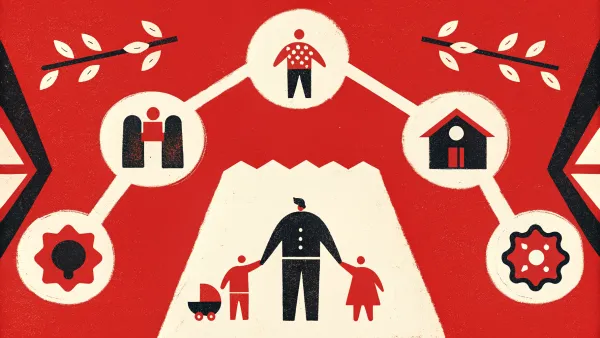
The full system for a freelancer or consultant looks like this:
Product — your offer. Not "I do design," but a specific proposal for a specific audience. If the offer is vague — "I do everything for everyone" — no amount of advertising will save it. A prospect clicks your ad, lands on your page, can't figure out what problem you solve, and leaves. A clear offer: "Landing pages for B2B SaaS, delivered in 2 weeks" — that's a product. "Design" is a category.
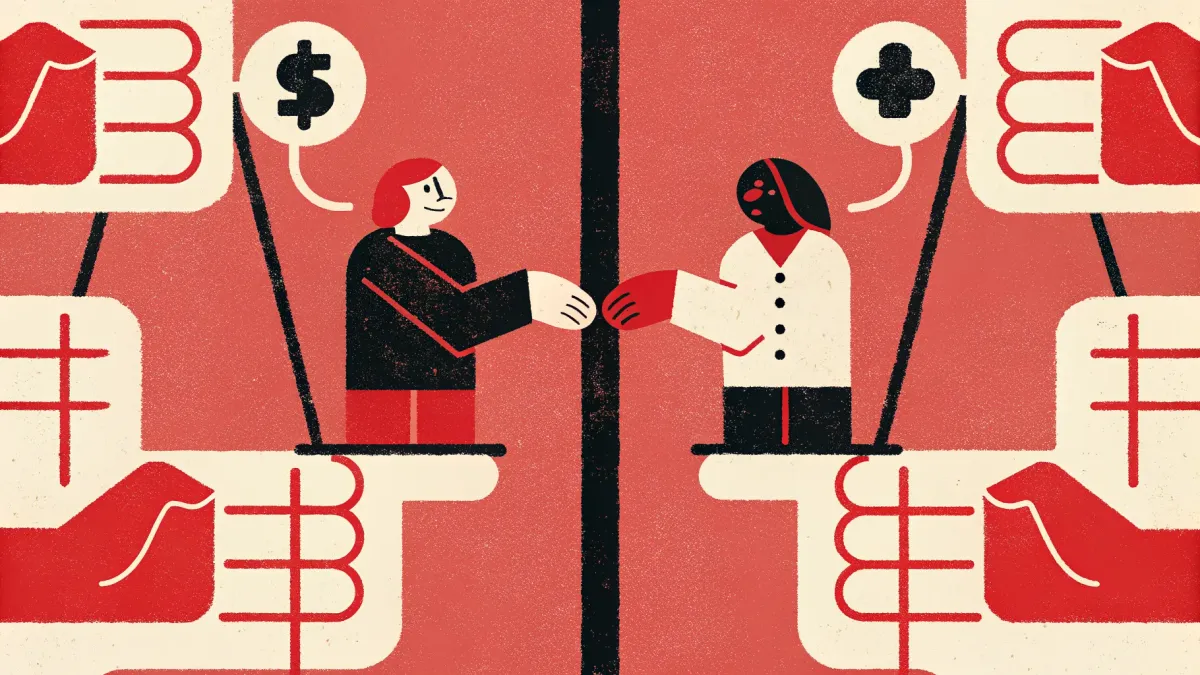
Price the client will actually pay. You might be a brilliant strategist. Your ads might perform. Clients might show up. But if your rate is $300/hour and you're pitching a pre-seed startup — the sale won't happen. Value-based pricing cuts both ways: the price has to reflect value for a specific segment. Not value to you — value to the client.
Place and purchase path — how the client finds you and how they pay. For a freelancer, "place" means the platform: Upwork, LinkedIn, your own site. "Purchase path" means the process from first contact to payment. And this is where more deals die than you'd think.
According to Jobbers (2026), 63% of freelancers wait over 30 days for payment, and incompatible payment systems add 5 to 12 days to the billing cycle. 58% of freelancers deal with non-payment or delays — industry-wide losses hit $15 billion a year. Your client is in Europe and you only accept payments through a high-commission system? The ad was great. The sale never happened.
Promotion — advertising. Content, outreach, targeting, partnerships. Only works when the first three pieces are in place.
You can't just focus on one element. "Let's dump the budget into ads" with a vague offer is like pouring gas into a car with no wheels. Walk through all four. If the product is unclear, the price doesn't fit your audience, or the purchase process creates friction — fix those before you launch a single ad.
How this works for freelancers and consultants
The four elements of a marketing system look different for a solo professional than they do for a retail store or a corporation.
What about useless products that advertising tricks people into buying?
Useless products exist, and people buy them. Advertising plays a role. But the mechanism is more complicated than it seems.
First, a business creates a need. MrBeast launched Feastables chocolate. His audience didn't "need" another chocolate bar. But through content, he manufactured a need: buying Feastables isn't about the food — it's about belonging to a community. The need was built on loyalty, not on any objective necessity.
Then people show up to satisfy that need. And the entire system matters here: product, price, place, promotion. But here's the critical part: you can create the need — and someone else can satisfy it.
Affiliate creator Jessica Turner made $4 million in partner sales in 2025 — without building a single product of her own. Brands poured millions into creating demand. Jessica converted that demand through audience trust. The brand built the hunger. Jessica took the sales.
This is the 95-5 rule in action: at any given moment, only 5% of potential buyers are actively looking for a solution (Ehrenberg-Bass Institute). If you only chase hot demand, you're competing for 5% of the market in the most expensive zone. If you create content that shapes the need, you're working with the other 95%.
For a freelancer, this means: you can educate your audience on a topic, build demand for a certain type of service — and then the client walks to a competitor with a sharper offer or a smoother purchase path. You created the demand. The sale went to whoever had the other three elements dialed in. So if you're investing in demand creation — content, education, community — make sure your offer, pricing, and purchase process are ready to capture that demand. Otherwise you're building someone else's business.
What doesn't work
These approaches seem logical. But for a solo professional, they kill results.
Depending on a single platform as your only channel. Upwork takes 10%+ in fees, plus paid connects. The algorithm shifts — and your lead flow drops to zero overnight. A freelancer tied to one marketplace isn't running a business. They're playing a lottery with applications. Instead: a dual strategy — platforms for initial flow, plus your own client base: an email list, a LinkedIn network, a referral system.
Copying ad strategies from big brands. A brand spending $100,000/month can afford an awareness campaign. A freelancer with $500 cannot. Instagram targeting at $3–5 per click with a 2% conversion rate turns every client into a money-loser. Instead: a content system — LinkedIn posts + a niche newsletter + systematic referrals. Zero ad spend, predictable flow.
Manual prospecting as your primary method. Hours burned on proposals with garbage conversion rates. Every month starts from scratch. As analysts point out: relying solely on manual outreach and cold applications is a recipe for burnout. Instead: a systematic pipeline — a content funnel drives inbound inquiries, a referral program generates warm leads, and outreach supplements the system but doesn't carry it alone.
Chasing only "hot" demand. SEO, marketplaces, search ads — all of these target people who are already looking. But per the 95-5 rule, that's 5% of the market at any given moment. The other 95% don't yet know they need your service. Competing for that 5% is the most expensive, most brutal fight. Instead: combine capturing existing demand (quick wins) with creating new demand — content, education, community. Write about the problems you solve before the client starts searching for someone to hire.
Let's wrap up
Advertising is one element of the system. Not the first. Not the most important.
A sharp offer. Pricing for the right segment. A way for clients to find you and pay without friction. Only then — promotion. Freelancers who build a four-element system don't depend on ad budgets. Those who pour everything into ads while their offer is broken? They burn cash and wonder why nobody's buying.
Check your four elements. Start with whichever one is most broken. Usually, it's the product.