You're not too picky — losing 6 close friends to drift rewired who you are
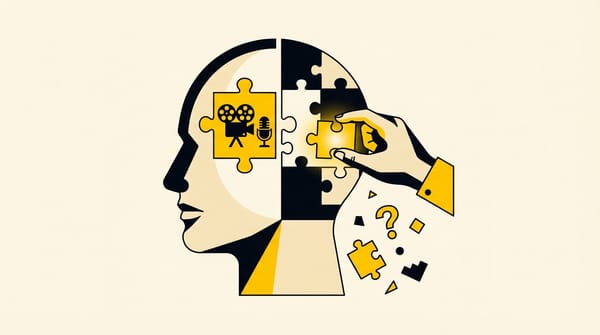
Losing six close friends to motherhood wasn't just lonely — it dismantled the environment that shaped how you think, feel, and function.


I'm thirty-five, I live in Pamplona, and I don't have anyone here.
Not in the recluse or social-phobe sense. I'm open, willing, ready. But when someone suggests grabbing a beer and talking about nothing, something tightens inside me — not from arrogance, but from emptiness. Ritual without depth is like chewing styrofoam: your jaw moves, but there's zero nourishment.
And yet I know for a fact that with real friends, those same rituals work beautifully. Beer, idle talk, any pointless nonsense — it all turns magic when you're with someone you're genuinely in sync with. I figured that out at fourteen and haven't changed my mind since.
Masha. Then Vika. Then Natasha. Then Alena. Then Polina. Then Varya. Then — no one.
I had real friends — the kind you call at 3 AM and tell everything. We didn't do yoga together or run marathons. We just thought the same way, saw things from the same angle, operated on the same frequency. And then, one by one, they became mothers.
I wrote a whole post about it — honest, without resentment, trying to understand what they were going through. A newborn doesn't know day from night, your body hurts, sleep deprivation twists you in ways you can't explain to someone who just stayed up late, and the world shrinks to the size of a nursery. I'm not angry at them. I miss them.
When I published that post, Masha wrote to me. Out of nowhere. She just recognized herself in the text and reached out. I wrote honestly — and someone I missed found her way back through that honesty.
Then I stumbled on research that put words to something I'd been feeling but couldn't articulate.
In sociology, it's called homophily — the tendency to gravitate toward people like yourself. The stronger the bond, the more you share: not just interests, but values, ways of thinking, orientation toward life. We don't consciously pick similar people — we just go deeper with them because there's less friction. Homophily explains how we find each other. It doesn't explain what happens next.
What happens next — Christakis and Fowler figured that out. They analyzed data from the Framingham Heart Study — twelve thousand people tracked over decades — and discovered that behavior spreads through social networks like a virus. If your friend gains weight, your chances of gaining weight jump forty-five percent. Happiness, loneliness, habits, the decision to quit smoking — all of it transmits across three degrees of connection: you, your friend, your friend's friend.
Your environment doesn't "influence" you — it rewrites you. Not through advice or lectures, but through normalization. When everyone around you runs in the morning, running becomes the default. When everyone around you complains about life, complaining becomes the default. You adjust without noticing, below consciousness, in a zone where willpower can't reach.
That's why losing six close friends isn't just "sad." I lost the environment that sustained a specific version of me: the thinking, honest, willing-to-be-vulnerable version. Without those people, that version starts to fade — like a plant someone forgot to water. Not right away, but inevitably.
And that's why the emptiness from beer with strangers isn't snobbery. You're not being picky. You're feeling the difference between an environment that sustains you and an environment that's just nearby. Christakis proved it: that difference isn't in your head. It's in the data.
Anthropologist Robin Dunbar explained why it works this way. A human being can maintain roughly a hundred and fifty stable relationships — and that's not a social limitation, it's a neurophysiological one. The brain simply can't handle more.
Inside those hundred and fifty sits a nested structure, like nesting dolls: five closest people, fifteen good friends, fifty acquaintances you'd call friendly, and a hundred and fifty people you know. Each ring costs something — time, attention, emotional energy. When you add someone to the inner circle, someone else inevitably falls out. Not because you're a bad friend, but because the brain doesn't have extra slots.
Friendship is like an old phone with a contact limit: to save a new number, you have to delete someone.
Moving from Russia to Spain triggered exactly that process. I didn't lose people all at once — I slowly shifted them from the circle of fifteen to the circle of a hundred and fifty, and from there into nowhere. No conflict, no hard feelings, just the inertia of new days.
Katya stayed. The only one.
We met through work, but the friendship didn't run on work or shared activities — we saw the world the same way. We don't need to spend time together to stay close: one call a month is enough.
In socionics, there's a concept of dual relationships — when two people compensate for each other's weak spots. You can argue about how scientific socionics is, but the phenomenon itself is familiar to everyone: there are people who recharge you, and there are people who leave you drained, like gears with mismatched teeth grinding against each other.
With Katya, the gears matched. Not because we're alike — the likeness helped us find each other. But because we complement: she sees what I can't, and I put into words what she feels but can't express. It's not shared hobbies or a regular Thursday bar. It's alignment at the level of worldview.
Research on married couples backs this up: dual pairs, where partners complement each other, account for forty-five percent of lasting marriages. We find people through similarity, but we stay with the ones who cover our blind spots.
If you're looking for "your people" — don't search by hobbies or bar schedules. Search by how someone thinks. Katya doesn't run marathons with me and lives in another country, but she's closer than anyone. Because worldview doesn't depend on time zones.
I had a best friend. Artyom. I loved him platonically, with everything I had, the way you only can in those years when you haven't yet learned to hide it. With him, I was ready to do anything — any pointless, stupid thing. What mattered wasn't what we were doing. It was that we were side by side.
That's a separate story, a painful one, and I'm not ready to tell it here. But Artyom set the bar for me. I know what real connection feels like — and that's why substitutes don't pass. That's why beer with strangers brings not joy but ache. Not for the beer — for what the beer is missing.
And if you also know what real connection feels like — you can't pretend styrofoam is food either. That's not a curse. It's a compass. It keeps you from wasting time on what won't nourish you.
I'm thirty-five. I'm in Pamplona. I have Katya in my phone, six friends-turned-moms I call sometimes, and Artyom, who I miss.
And I have a blog.
I didn't start it as a way to find people. I just started writing honestly — about burnout, about habits, about friends I'd lost. And I discovered that honest writing works like a signal fire. Masha saw the post and wrote to me — not because I called out to her, but because she recognized herself.
Grabbing a beer with a stranger — ritual without depth. Writing a text where you're naked — that's a different ritual, an ancient one. Anthropologists say tribes form through shared activity and common rituals. But they don't mean beer at a bar — they mean the moment you tell the truth and someone answers: "me too."
It doesn't have to be a blog. It can be a conversation, a project, a letter, a three-minute voice message. Anything where you're real instead of convenient. Masha didn't show up because I called — she showed up because I stopped hiding.
I'm writing this post on a Saturday evening. Alone. In an apartment in Pamplona.
Social bonds change us — that's not a motivational quote, it's neuroscience and statistics. The only thing I can control is the quality of the signal I send out. After that — whoever resonates will find their way.
Or they won't. But I'm going to try.