I Built a Content Funnel. Then I Saw It Had No Soul.
Open loops, picket fences, sandwiches — I mastered every retention trick. Then I caught myself optimizing readers instead of talking to them.


How irresistible stories actually work
There's one technique everyone uses — from Netflix screenwriters to bloggers selling a $497 course. It's called an open loop. You start telling a story, cut it off at the most gripping moment, insert what you need (an ad, a pitch, a call to action), and only then close the loop.
It works every time. The brain can't abandon an unfinished story. That's not willpower or weakness — it's the Zeigarnik effect, described almost a hundred years ago. Unfinished tasks hijack attention more than completed ones. The brain literally can't let go.
And this is where the road forks.
The attention-retention machine
The standard playbook looks like this. A blogger posts a morning story: "I need to confess something to you…" Ellipsis. Next slide — an ad. Another ad after that. Only on the fourth slide do you get the confession, usually something harmless.
Or it gets more sophisticated: personal drama and sales content alternate all day long. Personal — pitch — personal — pitch. They call it "the picket fence." Post after post. You want to find out how the story ends — the guy, the illness, the scandal — so you swipe through the sales slides. Your eye catches an argument. You think: "Maybe this is for me."
Then there's another layer — "the sandwich." Emotion, facts, emotion. Dense content wrapped in light packaging. Useful stuff hidden between entertainment, because — and I'm quoting the logic here — "people came to zone out, not to learn."
> All of these techniques work. The question isn't about effectiveness. The question is what you're building when you use them every single day.
Here's what's happening at the mechanical level. Scarcity bias: "Only 3 spots left." Loss aversion: "Don't miss it — gone tomorrow." Curiosity gap: the headline promises but doesn't deliver. Sunk cost: you've already watched 15 stories, and quitting now means losing your "investment" of attention.
None of these techniques exploit stupidity. They exploit the normal wiring of the human brain. This is how we work. We can't drop something unfinished. We fear losing more than we want gaining. We reach for what's hidden.
And when someone architects content as a system of traps for these mechanisms — that's not storytelling. That's manipulation infrastructure with a human face.
When storytelling becomes a trap
I know this world from the inside. I studied these techniques. Tried some of them.
One day I caught myself thinking not "what do I want to say" but "how do I hold attention until the sales block." It's a subtle shift. Invisible from the outside. From the inside — it changes everything.
Because in that moment, the reader stops being a person you're talking to. They become a metric. Reach. Watch-through rate. Retention. 550,000 saw the first story — good. 350,000 — average. A "good morning" without intrigue — bad. Needs reworking.
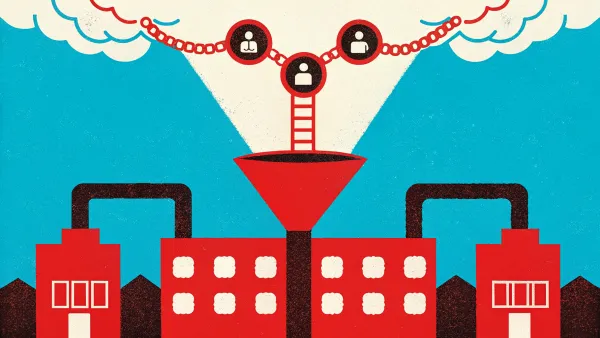
I looked at my own content and saw not writing, but a funnel. Every sentence — a bridge to the next. Every paragraph — a hook. Every pause — a calculated open loop.
Technically — flawless. By feel — empty.
Stop.
The problem isn't that the techniques are bad. The problem is they start running you. You're no longer telling a story. You're constructing a trap and decorating it with a story.