Your Funnel Isn't Building Trust — It's Engineering Compliance
Funnels exploit cognitive traps to lower your critical thinking. Here's what actually works when you stop manufacturing urgency and start giving real value.

How they sell you the funnel
Standard story. You land on some expert's website. A pop-up hits: "Download the free guide — 7 Steps to the Perfect Blog." You leave your email. You get a three-page PDF with one useful paragraph. The rest? Teasers for the paid course.
Then the email sequence kicks in. Day one: "So glad you're here!" Day three: "Here's the mistake 90% of bloggers make." Day five: "I was in your shoes once." Day seven: the emotional pitch. A countdown timer. A discount. "Only until Friday."
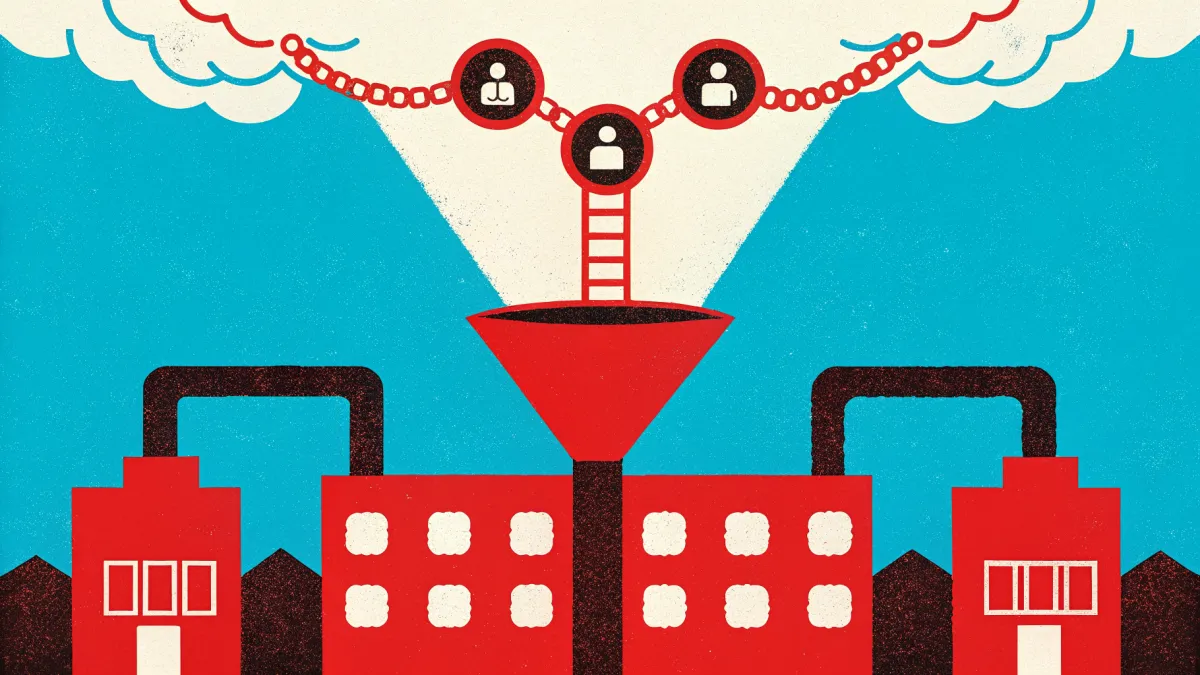
This is called a funnel. Free thing → email sequence → offer → pressure close.
And they tell you: without this, selling is impossible.
The mechanics: why it works on you
A funnel exploits several cognitive traps at once.
Reciprocity bias. You got something for free — a guide, a checklist, a first lesson. Your brain automatically feels indebted. This isn't a conscious choice. It's an evolutionary program: someone gave me something, so I owe them. Marketers know this and engineer "free" specifically to trigger that response.
Sunk cost fallacy. You already left your email. Already read three emails. Already spent time. Walking away means admitting that time was wasted. Buying feels easier.
Commitment escalation. First a small step: download the guide. Then bigger: sign up for the webinar. Then more: fill out a questionnaire. By the time the offer arrives, you've said "yes" so many times that one more "yes" feels like a natural continuation — not a decision.
Artificial scarcity. A timer on the screen. "Only 12 spots left." "Price goes up at midnight." The brain values rare things more — scarcity bias. The timer pressures you: decide now, no time to think. Anchoring: "full price $997" makes $297 feel like a steal. Even if the product isn't worth that much.
Every element of a funnel is intentional. It's an engineered sequence of psychological pressure where each step reduces your ability to make a rational decision.
What this looks like in practice
I bought a course on email marketing. The free thing was "5 Email Templates That Convert." The templates were so generic they applied to everything and nothing. But I was already in the funnel.
Seven days of email sequence. Every email ended with a micro-click: "Reply to this email," "Take this mini-survey," "Watch this 3-minute video." By day seven, I knew more about the author than I know about some of my friends. And when the offer landed — $297 instead of $997, only until Sunday — I bought.
The course contained what the author had already published on their blog for free. Packaged into modules, with a bonus "access to a private community" where nobody posted.
Here's what the funnel did: it didn't give me value. It manufactured the feeling of value through a sequence of micro-commitments.
The funnel-selling industry
The most profitable funnel is one that sells other funnels.
There's a whole market: courses on building funnels, email sequence templates, automation tools. They sell you an instrument you'll use to sell the same instrument to someone else. A nesting doll.
The standard pitch: "Build a funnel once — earn while you sleep." The people telling you this don't sleep because they're fixing their funnels. A/B testing email subject lines. Rewriting landing pages. Fighting the fact that their emails land in spam.
Now, with AI generating mountains of content and email blasts, open rates are dropping. People are tired of identical sequences. Inboxes are stuffed. The brain has learned to filter — not the spam filter, literally: your eyes glide past. Newsletter fatigue isn't a metaphor. It's 2026 reality.
And they keep telling you: you need a funnel. No funnel, no sales.
Stop
Let me separate two things.
The funnel as a concept — the idea that a person goes from "doesn't know you" to "buys from you" — that's not bad. It's just a description of reality. People don't buy from strangers. Trust builds over time.
The funnel as an industry — selling cookie-cutter pressure systems where every step is engineered to lower the buyer's critical thinking — that's my problem with it.
The difference is intent. Are you helping someone make an informed decision? Or are you helping yourself make their decision for them?