She wired payment same-day, then went back to spreadsheets a month later
She signed off, paid same-day, genuinely liked it—then quietly crawled back to her old spreadsheets. On paper I'm clean. So why can't I stop thinking the real work never touched the code?

There's one thing about that HR dashboard I still can't crack.
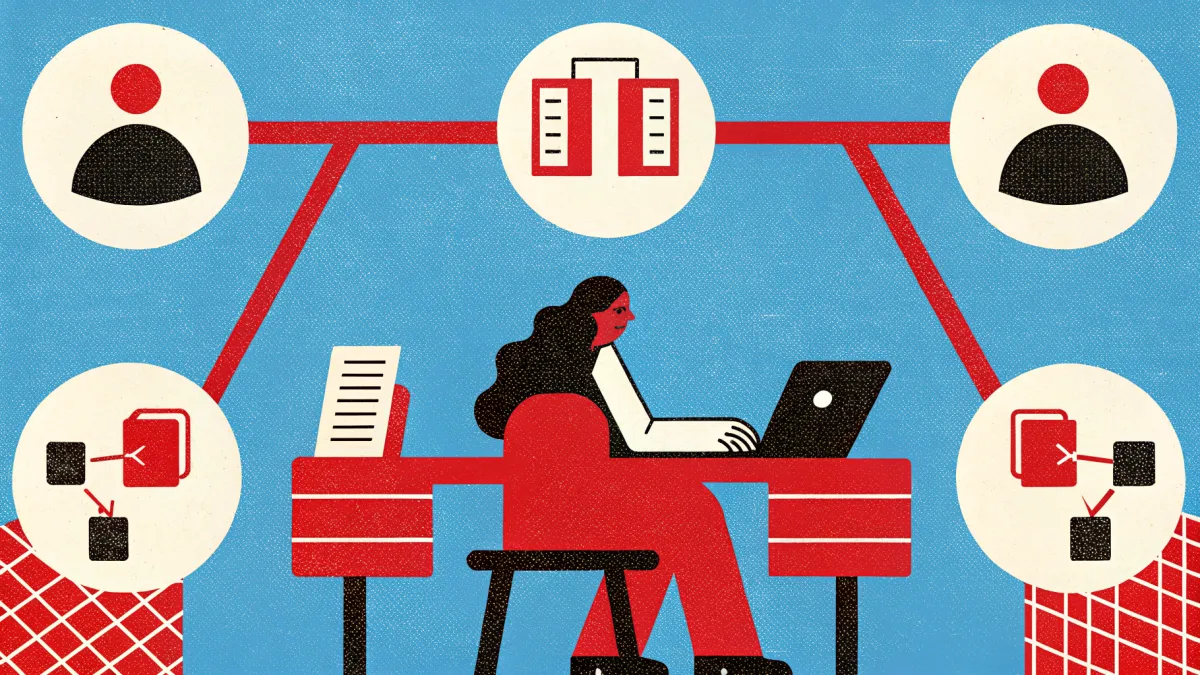
The client loved it. Not the polite nod at the end of a call — she genuinely liked it. She clicked through the tabs, found where I'd tucked the bulk vacation accruals, said "oh, that's handy." Signed off, wired the money the same day. And a month later she quietly went back to her spreadsheets and printouts — the exact ones I'd been hired to kill.
Here's what won't leave me alone. I'm not sure she made a mistake.
What I built
The dashboard was good — no false modesty here. Employee cards, vacations, performance reviews, a pile of small automations that ate the dumb manual busywork keeping everyone in HR permanently on edge. I spent weeks polishing the flows: where she'd click, what she'd see next, where three clicks collapsed into one. I asked her to test it. Asked her to break it. Asked her to tell me if anything felt off.
She didn't break it, and she didn't tell me. No time — an HR department, end of quarter, real people with real vacations and sick days. I got it, so I didn't push.
Requirements met. Six months later I was still tweaking that dashboard for free.
How I found out
I found out by accident. Messaged to ask if she needed anything else — just being polite. The answer came back something like "oh, the dashboard… yeah, we're still doing it the old way for now." The old way. Six months of "for now." All the automation I'd been paid for sat untouched, like a treadmill in the corner of a bedroom.
My first thought was short and mean: well, her loss. She asked for it, she approved it, she crawled back to the busywork on her own. I'm here polishing flows at night, and she's — "the old way."
The thought held for about a day. Then it started to feel uncomfortable.
Why she did it
I started running through the reasons a normal person walks away from the thing that's better for them. There were indecently many.
No time to get into it — new is always slower than old for the first couple of weeks, and she didn't have those weeks. Worn down by my questions, so at some point she just nodded to make me go away. She'd paid, and decided her part ended there — the rest was on me. Afraid to admit she didn't get the interface, because this is her turf, and looking clueless about your own job is embarrassing. Didn't want to make the dozen tiny decisions I kept dumping on her — easier to make none. Figured it'd somehow sort itself out later.
Not one of those reasons is about the dashboard. Every one is about a person I never actually pulled in.
Where my part is
This is where I get stuck every time.
On paper I'm clean. Spec closed, sign-off signed, money in the bank — any lawyer would pat me on the back. I could stop thinking about it entirely: did what was asked, not my problem after that.
But it feels to me — and I can't prove it, I just feel it — that the real work was never in the dashboard. It was in getting this woman talking before I wrote a single line. Pulling out not what she ordered, but how she actually lives her workday. Hearing when "ok" means "ok," and when it means "I'm tired, leave me alone." I didn't do that. So I built a perfectly working thing nobody uses.
Can you even call that a result? I can't make myself say the word.
What I don't know
There won't be a moral. "Pay attention to your clients" — I'm no role model handing out advice.
Some contractors honestly believe their job is to deliver to spec, and after that grown adults can sort themselves out. I can't say they're wrong. Maybe it's even healthier — not carrying someone else's responsibility on your back. There are just a lot of them, and from what I've seen, they swap out easily, one for the next.
I picked being different, apparently. Not out of nobility — I tried calling it nobility, doesn't hold. More like stubbornness: it physically bugs me when my work lies there dead, even when it's not my fault.
With that dashboard I never did figure out whose fault it was. But since then I listen less to what a client says at sign-off. More to how they go quiet when something's actually bothering them.