I Stopped Doing Launches. Here's How I Sell Now.
Launches work — the numbers proved it. But I didn't like who I became running them. Here's the quieter model I chose instead.

How they sell you through hype
A timer on the screen. "Only 3 spots left." "Sales close in 4 hours." You're sitting through a webinar that's been going for two hours. You're exhausted. They showed you case studies, paraded other people's results, dragged you through an emotional roller coaster. And now — the offer. Right now. 70% off. Only for people on this webinar.
You have minutes to decide. Not days. Not after you sleep on it and think it through.
Minutes.
This is the standard launch model. Not the only one, but the most common. It works — not because the product is good. It works because your brain is wired for it.
The mechanics: why you buy things you don't need
Three cognitive biases that power a classic launch.
Scarcity bias. The brain treats rare things as valuable. "Only 3 spots left" — and suddenly a $297 course feels like the last train out of town. Never mind that "spots" is just a number in a site admin panel that someone can change whenever they want.
Anchoring. "Full price — $997. Today for you — $297." You're not evaluating whether the course is worth $297. You're comparing $297 to $997 and feeling a bargain. The anchor is set. Rational evaluation — switched off.
Loss aversion. Losing an opportunity hurts more than missing a gain. "Sales close, next round in six months." And people who never planned to buy start writing: "Please, can I still get in? I missed it." They show you those people. On purpose. So everyone else sees: someone regrets not buying. Must be worth it. Better run.
One course producer described how a pre-order brought in a million dollars in three minutes. They immediately showed that number to the audience. Sign-ups accelerated. Herd trigger: everyone's running — I should too. Plus scarcity: limited spots, pre-order closing. Plus the emotional pitch: "A new life awaits you!"
Three minutes. A million dollars. People didn't even read the syllabus.
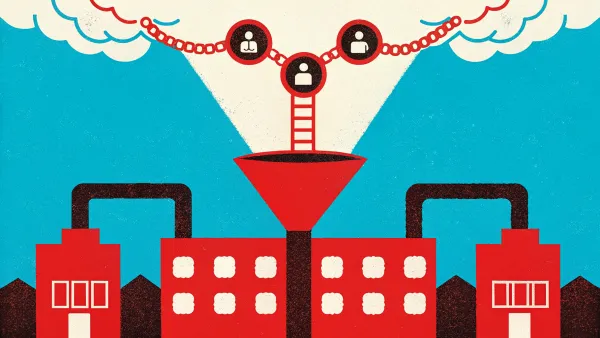
The anatomy of "perpetual warm-up"
There's a term in the industry — "perpetual warm-up." Sounds like something from a heating system manual, but in practice it's a system where all your content — from morning stories to vacation photos — works toward one thing: a sale.
How it's built. Four layers:
First — values. You show your life, display freedom, money, time, hobbies. People are drawn to values. Nothing's been sold yet, but the desire is already forming: "I want that too."
Second — expertise. You share case studies, talk about results, answer questions. The follower starts trusting you as a specialist.
Third — niche. You're not selling your product — you're selling the idea itself. That freelancing means freedom. That content creation is a real profession. That online education is the future. The person doesn't know about your course yet, but they already want into the niche.
Fourth — product. Now comes the offer. But by this point, the person has spent months inside the first three layers. They're warmed up. They're ready.
The genius of this system is its invisibility. You watch someone's stories and think: "What an amazing life." That's layer one. You see a post breaking down a case study. Layer two. A post about how the author loves their work. Layer three.
And when the sale opens — you feel like you wanted it yourself. Like it was your decision.
Maybe it was. Or maybe you were guided there over six months.